Why Your Video Editings Are Boring
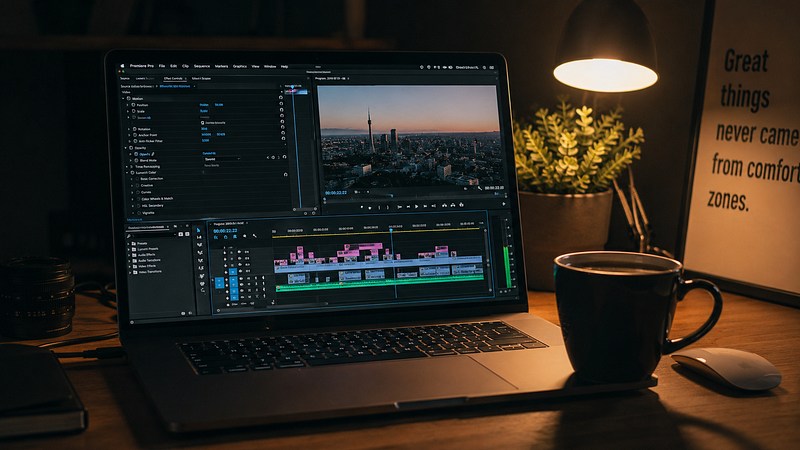
Most editors obsess over fancy transitions. Pros obsess over psychology. Here is the exact framework to edit videos that people actually watch until the end.
I used to spend hours perfecting a smooth cross-dissolve or a cinematic color grade, only to post the video and watch the analytics show a 90% drop-off in the first 10 seconds.
If your audience is scrolling past your videos, the problem isn’t your software. The problem is your editing architecture.
In a world of shrinking attention spans, video editing is no longer just about cutting clips together — it is a precision engineering problem. You are fighting for microseconds of human attention.
Here are the 4 technical rules of high-retention video editing that completely changed the way I structure my content.
1. The 3-Second Pattern Interrupt (Micro-Pacing)
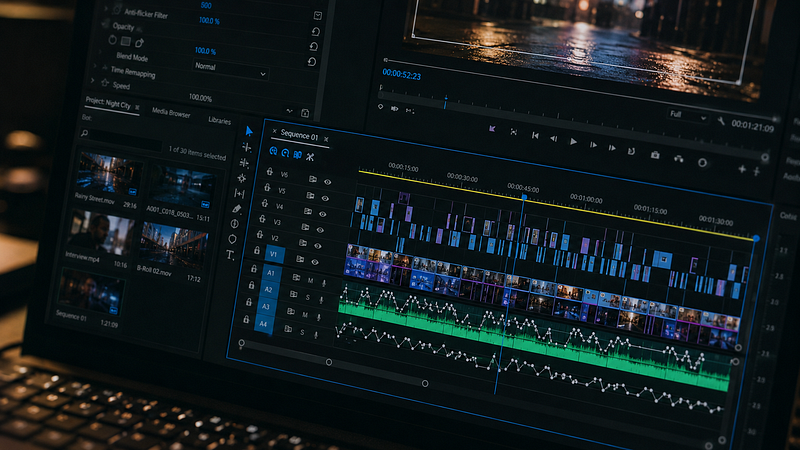
The biggest mistake amateur editors make is letting a shot linger for too long. On mobile feeds, if nothing changes visually within 3 to 5 seconds, the brain registers the content as “static” and the thumb scrolls.
- The Fix: Introduce micro-pacing. This doesn’t mean chaotic jump cuts. It means calculated visual scale adjustments — zooming in on a subject for emphasis, cutting to a reverse angle, or introducing contextual B-roll every few seconds to reset the viewer’s attention clock.
- The Rule: If a clip doesn’t add value or change the visual dynamic, cut it out. Ruthlessness is your best editing tool.
2. Kinetic Typography (Captions for Muted Feeds)
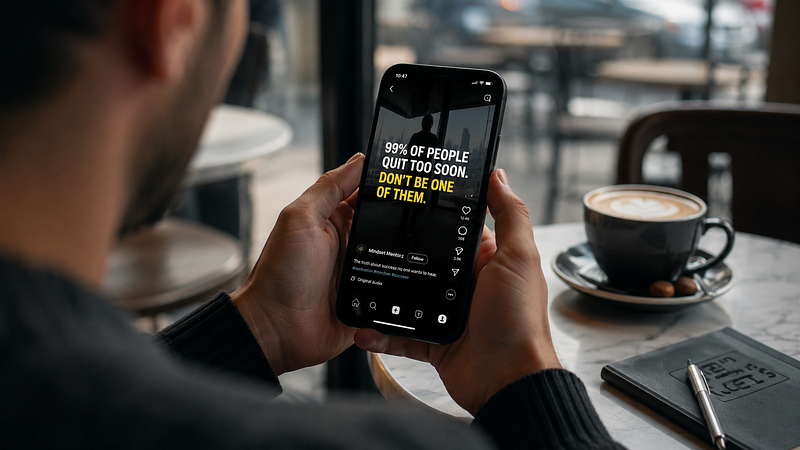
Up to 85% of social media videos are watched without sound. If your core message relies solely on your audio track, you are losing the vast majority of your audience instantly.
- The Fix: Use Kinetic Typography. This isn’t just slapping static subtitles at the bottom of the screen. It involves using bold weights, high-contrast color tones, and subtle motion for on-screen captions.
- The Rule: Highlight the power words. Make the text pop in sync with your vocal emphasis. Your key value propositions must be easily readable at a glance on a small mobile screen.
3. Sound Design (The Invisible Hook)
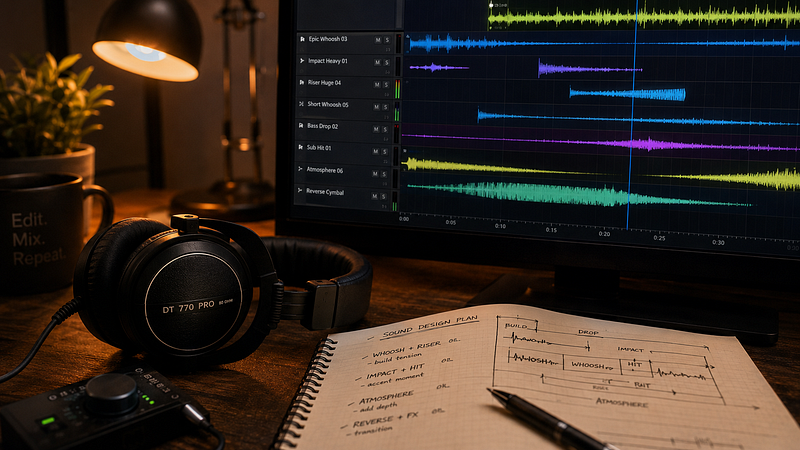
While visual pacing grabs attention, sound design is what creates emotion and immersion. A video without sound design feels flat; a video with it feels cinematic and professional.
- The Fix: Layer your audio. Add a subtle ambient track (room tone), use “whooshes” for graphic transitions, and incorporate impact sounds for text reveals.
- The Rule: Utilize J-cuts (audio starts before the visual) and L-cuts (audio continues after the visual cuts away). This creates a seamless psychological flow that prevents the jarring “hard cuts” that cause viewers to click away.
4. The Open Loop Framework (Retention Architecture)
A video that gives away its punchline in the first 5 seconds gives the viewer permission to leave. You must engineer curiosity.
- The Fix: Structure your edits to create “open loops.” Start with a provocative statement or an incomplete visual. Use B-roll to tease the final result before showing the process.
- The Rule: Always answer a question by asking another one. The pacing of your edits should guide the viewer down a path where they have to watch the next 5 seconds to get the resolution.
The Step-by-Step Editing Workflow
If you want to stop making boring videos, follow this phased approach to your next edit:
Phase 1: The A-Track Foundation
Do not touch the timeline until your audio track (A-track) is perfectly paced. Cut out all the “ums,” awkward pauses, and filler words. If the story doesn’t flow verbally, no amount of visual effects will save it.
Phase 2: Visual Reinforcement (B-Roll)
Once the A-track is tight, lay down your primary footage. Wherever the visual becomes static or you need to explain a complex concept, overlay relevant B-roll to visually demonstrate what is being said.
Phase 3: The Engagement Layer
Add your kinetic typography for key phrases. Insert your sound design elements (whooshes, risers). Apply color grading and subtle zooms to direct the viewer’s eye exactly where it needs to go.
Final Cut
A great video edit doesn’t require Hollywood-level budgets or complex After Effects compositing. It requires an understanding of human psychology, micro-pacing, and a deep respect for the viewer’s attention span.
By building clean editing architectures, tracking retention metrics, and delivering value through engaging visual mediums, your videos will stop being background noise and start being conversion machines.
If you want to see how high-retention video marketing is integrated into a complete growth pipeline, you can explore the end-to-end digital marketing services offered by Akaria Innovations.

.jpeg)
Comments
Post a Comment